
Srila
Prabhupada
His Divine Grace A.C. Bhaktivedanta Swami Prabhupada carried Krishna consciousness across the world and personally planted its roots in Kenya.
One life,
a world awakened
At an age when most people retire, Srila Prabhupada began the work that would define the modern global Hare Krishna movement.
Born Abhay Charan De in Calcutta in 1896, Srila Prabhupada was raised with devotion to Krishna from childhood. As a young man he studied, worked, and lived a responsible family life, but the central instruction of his life came in 1922 when he met Srila Bhaktisiddhanta Sarasvati Thakura: take the teachings of Sri Caitanya Mahaprabhu to the English-speaking world.
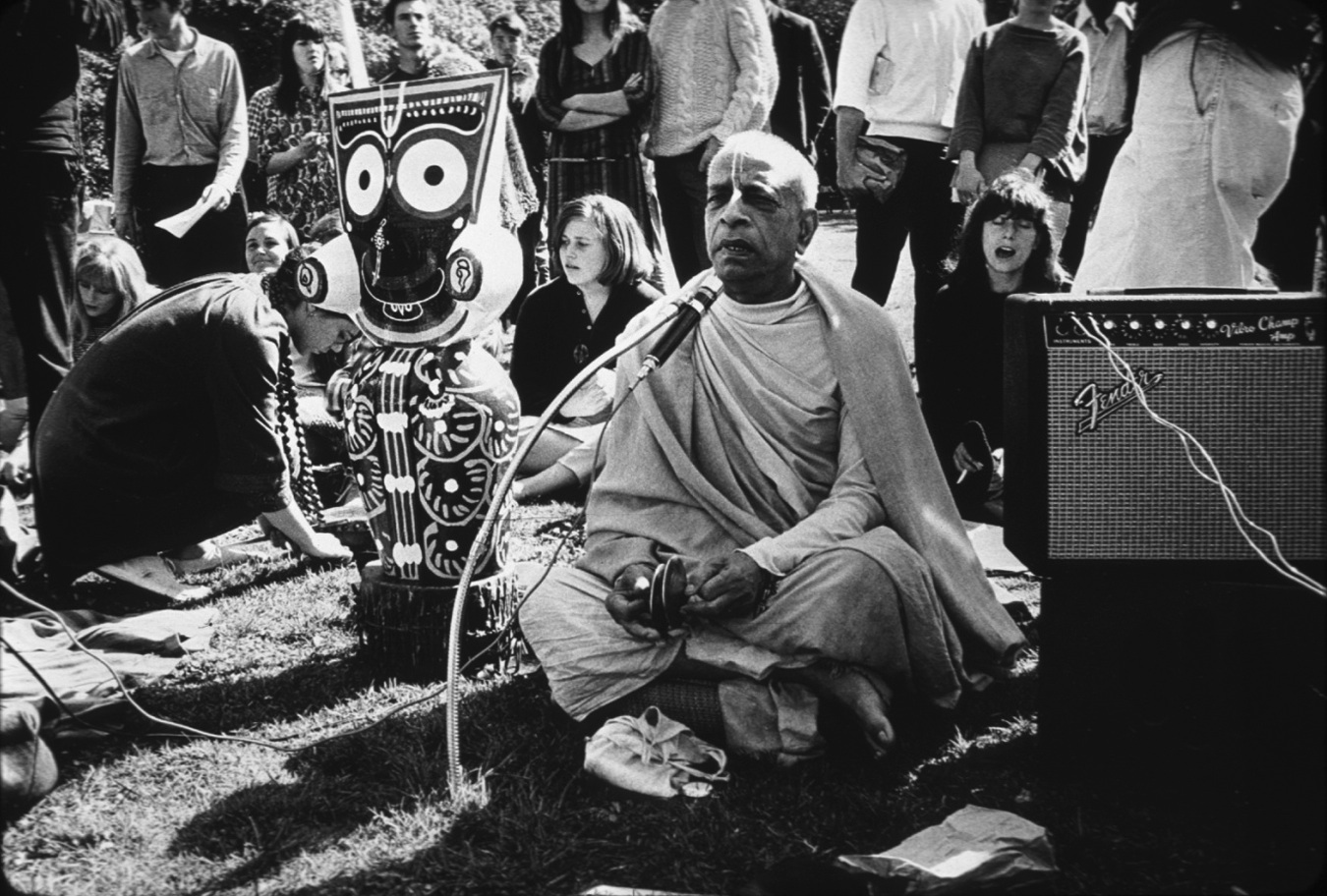
More than four decades later, after accepting sannyasa and publishing early volumes of Srimad-Bhagavatam, he boarded the cargo ship Jaladuta in 1965. He arrived in America with little money, no institution waiting for him, and a trunk of books. In July 1966 he incorporated ISKCON in New York City.
In only twelve years, his small storefront mission became an international society with temples, farms, schools, restaurants, book distribution, public kirtan, deity worship, and prasadam service across continents. His achievement was not only organizational; it was deeply personal. He gave people a daily practice, a spiritual family, and a way to live in relationship with Krishna.
Born Abhay Charan De
Srila Prabhupada appeared in Calcutta on September 1, 1896, in a Vaishnava family devoted to Krishna.
The instruction
He met Srila Bhaktisiddhanta Sarasvati Thakura, who asked him to share Sri Caitanya Mahaprabhu's teachings in English.
Across the ocean
At sixty-nine, he sailed to America on the Jaladuta with trunks of books and a mission larger than any institution he yet had.
ISKCON founded
In New York City he incorporated the International Society for Krishna Consciousness, beginning a worldwide movement from a small storefront.
Nairobi blessed
He visited Kenya, preached in Nairobi, directed outreach to African people, and personally installed Sri Sri Radha Bankebihari in 1972.
Living legacy
He passed from this world in Vrindavan, leaving his books, temples, disciples, kirtan, prasadam, and instructions as a continuing shelter.
He did not send only a movement.
He came in person.
ISKCON's early Kenyan work began remarkably soon after the society was founded. Srila Prabhupada came to Nairobi in 1971, giving darshan, leading kirtan, lecturing in the evenings, and encouraging the devotees who were trying to establish Krishna consciousness in East Africa.
Nairobi was not peripheral to him. He instructed his leaders that Kenya was an African country and that Krishna consciousness should be shared with African people, not only with the resident Indian community. That instruction still shapes the heart of ISKCON Nairobi's outreach, education, Food For Life, and student work.
In 1972, Srila Prabhupada personally installed Sri Sri Radha Bankebihari in Nairobi. The worship, kirtan, prasadam, and hospitality offered today at Hare Krishna Close stand in continuity with that personal blessing.
1971-72
Nairobi visits
Personal care
East Africa mission
Reach everyone
Core instruction
A practical path of
hearing, chanting, serving
Chanting the holy names
He taught the Hare Krishna maha-mantra as the direct spiritual practice for this age: hearing, chanting, and remembering Krishna together.
Books as the foundation
His translations and commentaries on Bhagavad-gita, Srimad-Bhagavatam, and Caitanya-caritamrta gave ISKCON its philosophical backbone.
Prasadam for everyone
He wanted sanctified vegetarian food shared widely, famously urging that no one near an ISKCON temple should go hungry.
Mercy beyond boundaries
He insisted Krishna consciousness was not for one race, caste, or nationality, but for every living being.
Hare Krishna Hare Krishna, Krishna Krishna Hare Hare
Hare Rama Hare Rama, Rama Rama Hare Hare
Sources and image notes
This page combines your supplied text with public references. The downloaded images are from Wikimedia Commons pages with reuse/license information. Nairobi-specific Prabhupada photos were found online, but not used as site assets because the license status was not clear enough.